
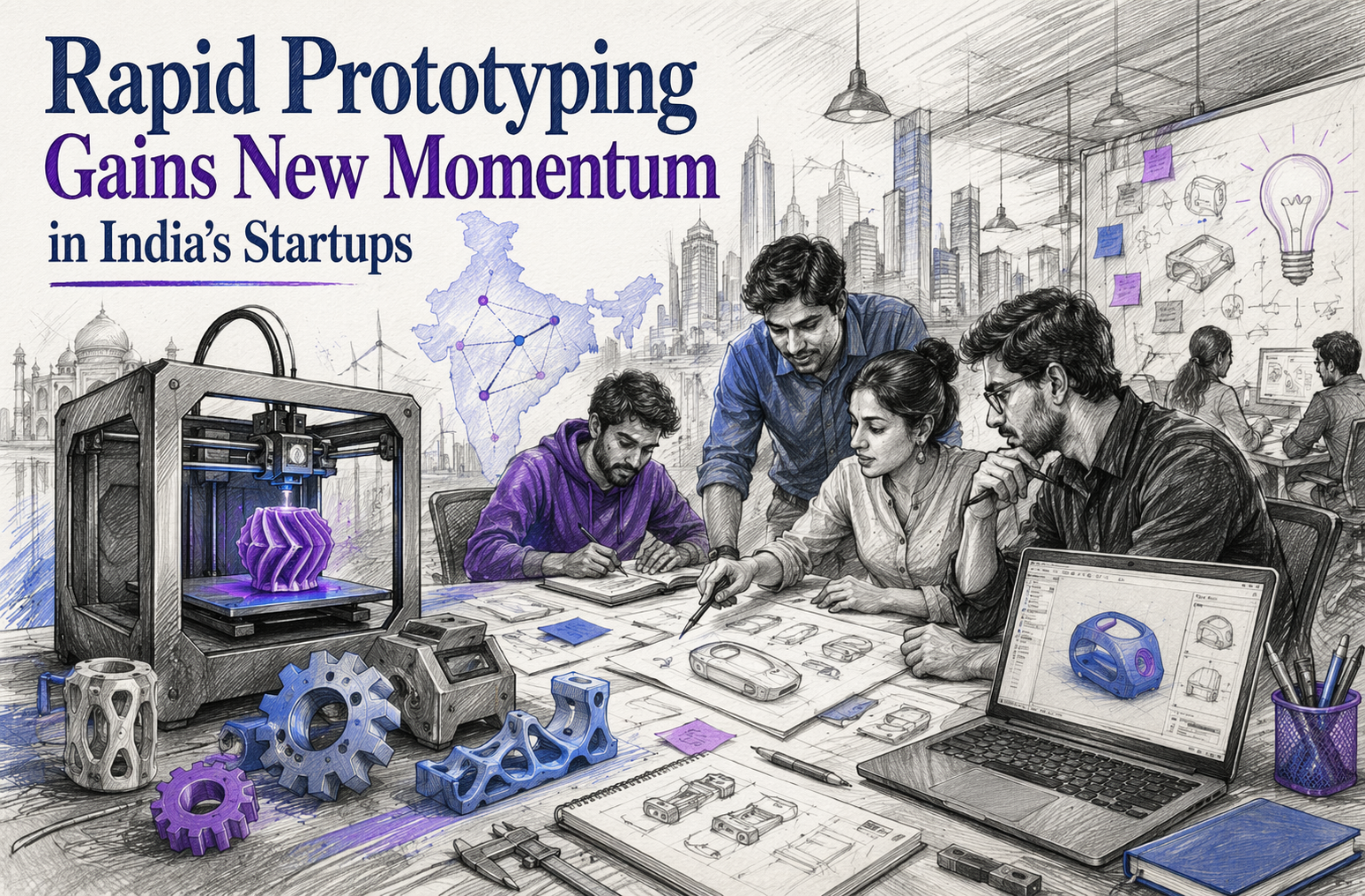
Rapid Prototyping Gains New Momentum in India’s Startups
Quick Summary: Rapid prototyping is becoming essential for Indian startups to stay competitive, enabling faster product testing and validation. New labs, incubators, and government support help startups prototype, test, and refine products more quickly, reducing costs and time to market. This shift is especially important as startups move into hardware, tech, and manufacturing sectors, where early prototypes influence investor confidence and product success.
India’s startup push now rewards speed. With 2 lakh-plus DPIIT-recognised ventures and many rising from Tier-II and Tier-III cities, Rapid Prototyping India is moving from niche service to core startup need. New labs and test facilities help startups prototype, test, and fix products faster. That matters because slow builds can cost funding and market timing. This piece explains why Rapid Prototyping India and smarter Prototyping Solutions now give founders a real edge in Rapid Prototyping India.
Why India’s Startup Ecosystem Is Moving Faster on Prototypes
From software-first to product-first ambition
India’s startup scene is not just shipping apps now. It is pushing harder into devices, EV parts, health tech, drones, and industrial products. That shift changes one thing fast – teams need real prototypes early. The scale is there too. India had over 2 lakh DPIIT-recognised startups by December 2025, according to the Press Information Bureau.
What funding and scale-up pressure changes
Money now comes with proof demands. Founders must show fit, test parts, and cut risk before bigger orders. That is why prototyping is moving upstream.
- Faster investor demos
- Better pilot testing
- Lower tooling mistakes
DPIIT has also signed 50+ MoUs to build manufacturing support and incubator links that give startups access to pilot lines, test beds, and prototyping facilities, as reported by The Economic Times.
Also Read: AI-Powered Rapid Prototyping Reshapes Indian Product Teams
The New Infrastructure Behind Faster Product Validation
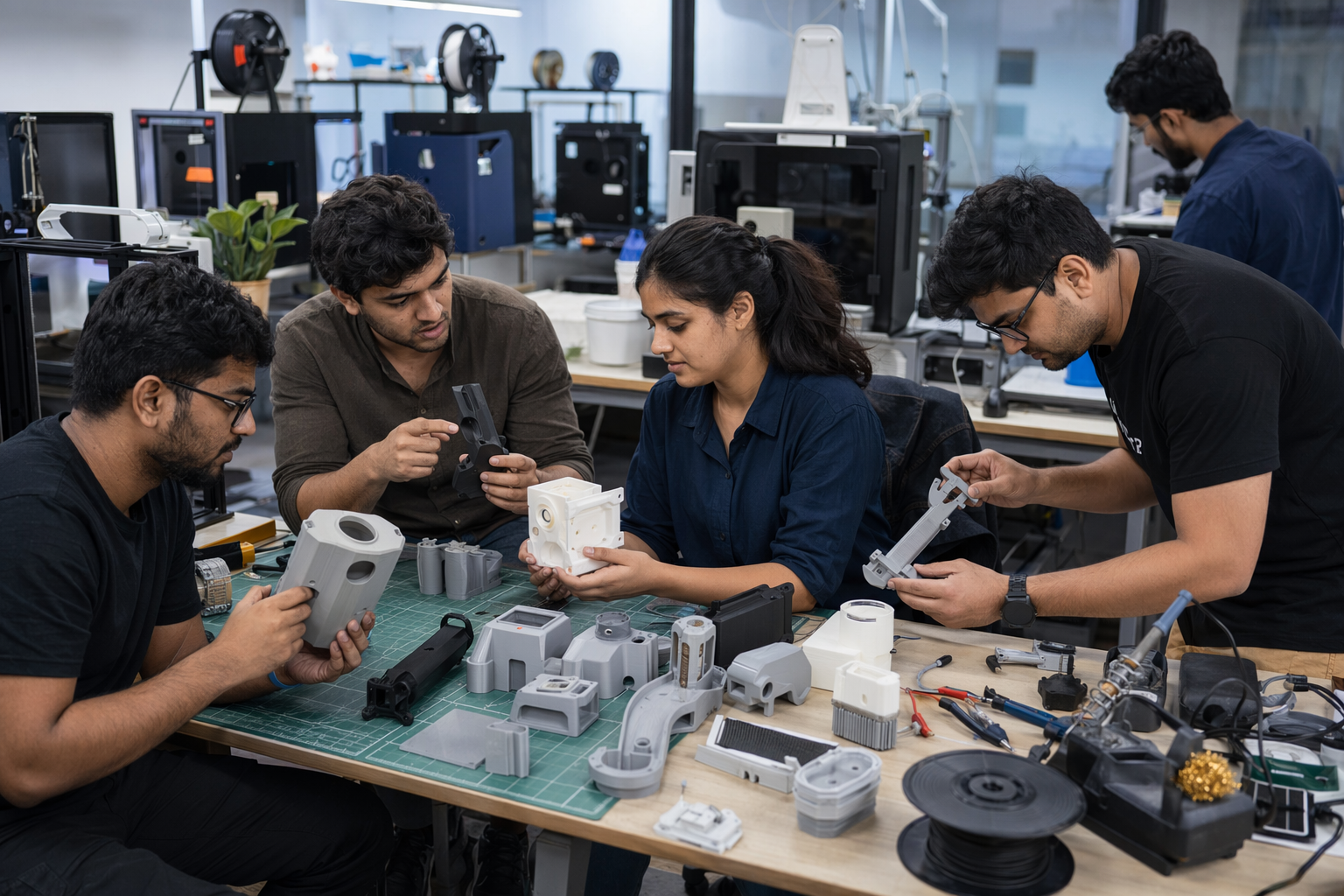
Incubators in India now do more than give founders desks and mentors. They are turning into real prototype engines. Under NIDHI PRAYAS 2.0, startups can get prototype funding, fab lab access, and technical help. In Andhra Pradesh, RTIH and Kia India are setting up an advanced prototyping centre in Amaravati with testing and manufacturing support. That cuts the gap between sketch, sample, and buyer-ready part.
Testing is now built into the same pipeline. That matters because a fast print alone does not prove product fit. Teams need to check form, strength, assembly, and use-case risk early.
- Incubators reduce setup cost
- Labs shorten feedback loops
- Testing access lowers launch risk
| Need | Old way | New way |
|---|---|---|
| First prototype | Outsource in steps | Build inside incubator network |
| Validation | Late-stage check | Early testing with prototyping |
| Commercial readiness | Slower handoff | Faster move to pilot batches |
For firms like SN 3D Studios, this shift creates better clients – teams that arrive with clearer test goals and faster buying intent.
How Fast Prototyping Is Reshaping Product Timelines
What founders gain when they prototype sooner
Founders who build early cut guesswork fast. They spot weak parts, bad fit, and cost issues before tooling or big purchase orders. That saves cash and keeps teams moving. In India, this matters more now because startups are reaching commercial runs faster. The Economic Times reported chip startups moving from prototype to customer pilots and toward production with government support in India’s chip startup shift.
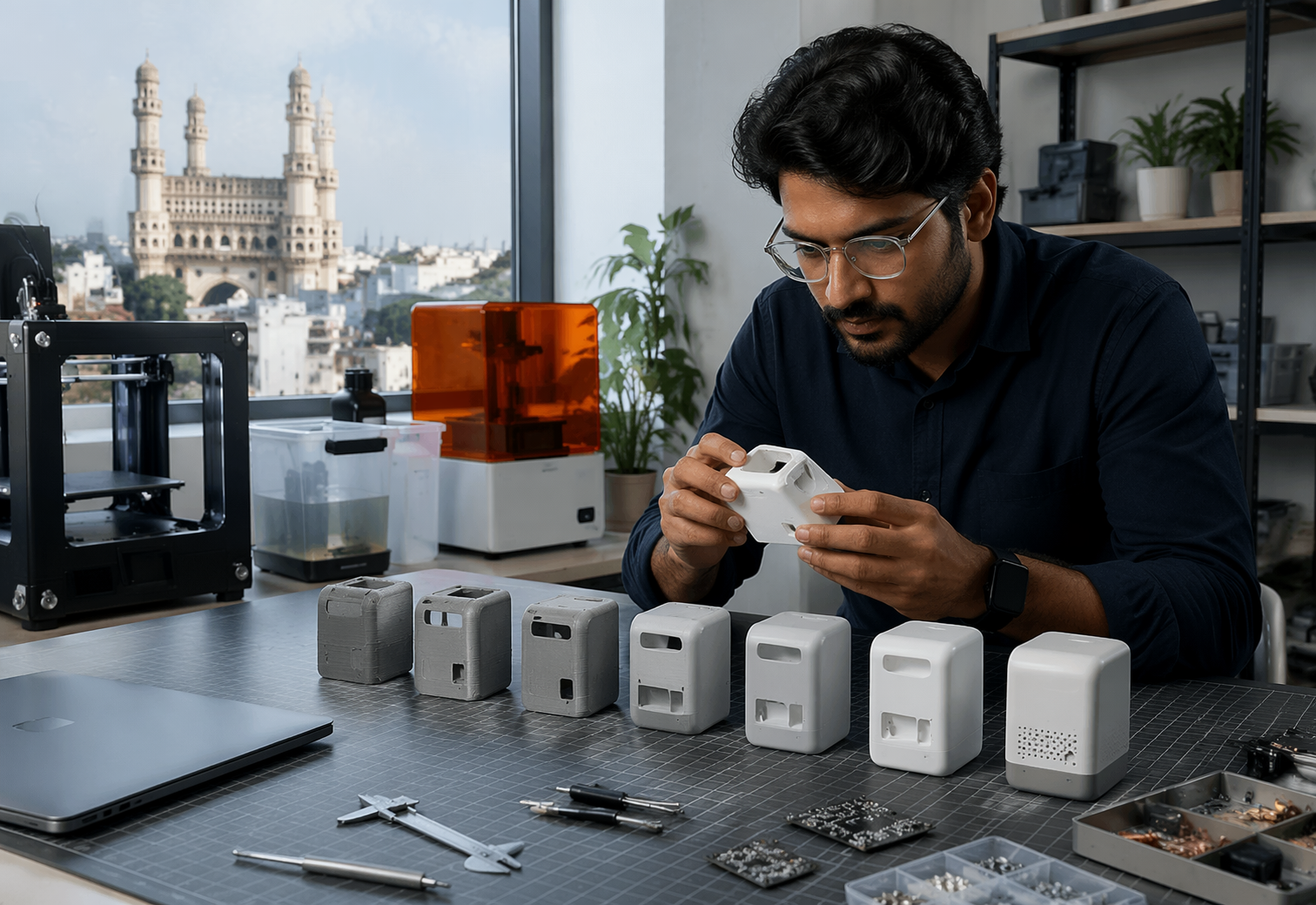
Early prototypes do not just test design – they test timing.
Why the commercial audience should care
Buyers, architects, and product teams care because fast prototypes shorten approval cycles. You can review shape, finish, and fit in hand instead of waiting on drawings alone. That lowers rework risk before final production. Mint noted Whizzo cut product development from the usual 12 to 15 months to a few weeks by linking lab work, prototyping, and manufacturing in one flow in this report on lab-to-fab speed. For service buyers, that means faster launch windows and fewer late surprises.
How India’s Prototyping Boom Began
India’s prototyping boom grew from policy support meeting real product demand. Startup India gave founders faster compliance, IPR support, and seed funding for proof of concept and prototype work through the official Startup India platform. At the same time, manufacturing policy got stronger. In 2025, DPIIT said it had signed MoUs with over 50 firms to build manufacturing incubators with test beds, design centres, and prototyping access, according to The Economic Times. That mix made rapid validation easier for Indian startups.
Need a faster path from idea to market? Partner with SN 3D Studios for precise prototypes, engineering parts, and expert support.
Frequently Asked Questions
Q1: What role does rapid prototyping play in India’s startup ecosystem and innovation acceleration?
It helps startups test ideas fast, show working models to investors, and fix design flaws before tooling or full production. This cuts waste, shortens launch time, and supports incubator-led product validation across hardware, medtech, consumer goods, and architecture.
Q2: What are the key benefits of rapid prototyping for Indian manufacturing and product development?
Key gains include lower early-stage cost, faster design changes, better fit and function testing, and clearer buyer feedback. Teams can compare materials, reduce production risk, and move from CAD to pilot-ready parts with more confidence.
Q3: How does SN 3D Studios enhance rapid prototyping services for Indian startups and entrepreneurs?
SN 3D Studios supports startups with custom 3D printing, precise prototype output, and hands-on guidance for parts, product mockups, and architectural models. That makes it easier to validate concepts quickly and refine designs before larger manufacturing commitments.
Conclusion
Rapid prototyping is moving faster in India because startups, labs, and factories now connect better. With over 2 lakh recognised startups and broader chip ecosystem support, speed to validation matters more than ever PIB data and Semicon 2.0 news.