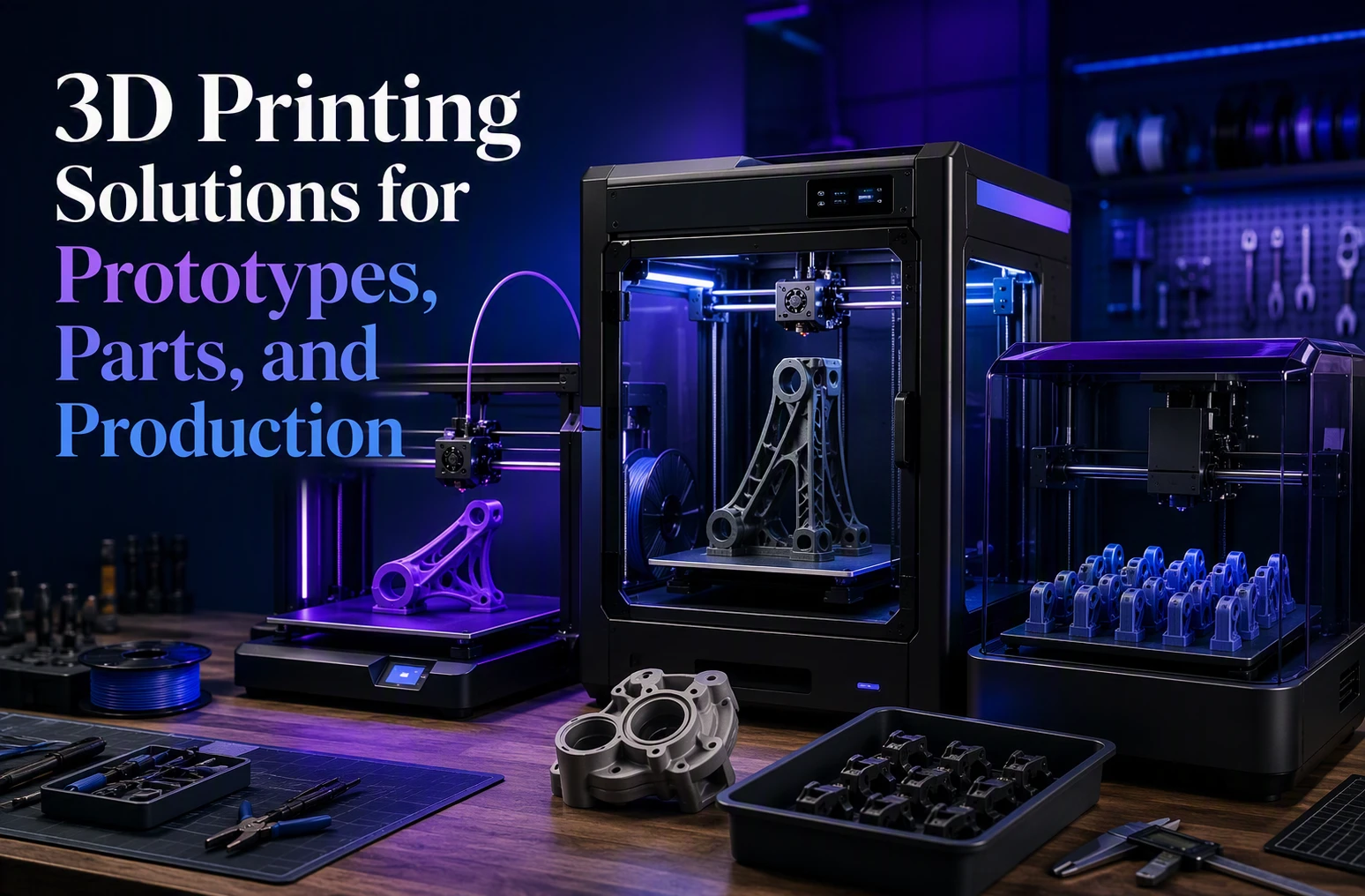
3D Printing Solutions for Prototypes, Parts, and Production
Quick Summary: 3D printing in India is ideal for rapid prototypes, small batches, and custom parts, with success depending on choosing the right process, material, and design. Proper preparation of CAD files and understanding the part’s intended use ensure quality and durability. Industries like engineering, product development, and architecture benefit from faster, cost-effective models and components. Working closely with experienced vendors like SN 3D Studios helps optimize results and reduce waste.
An EV bracket, an architect’s façade model, and a custom gift sample can all move fast through 3D Printing India. The catch is simple: wrong process, material, or finish leads to weak parts, poor looks, and wasted cost. This guide explains how 3D Printing India fits prototypes, parts, and small-batch runs, with clear advice on Prototyping Services, Custom 3D Printing, and vendor selection in 3D Printing India based on real use cases.
How to Choose the Right 3D Printing Method
Match the Part to the Job
Start with the part, not the machine. Pick your method based on use, detail, strength, finish, and budget. If you need a fast concept model, material extrusion often works. If you need sharp detail for a scale model or gift, resin is usually better. For tougher end-use parts, powder-based methods can make more sense. ASTM and ISO group additive manufacturing into standard process families, which helps you compare options clearly ISO/ASTM 52900.
Compare Common Industrial Processes
Material extrusion is low cost and good for basic prototypes. Vat photopolymerization gives smooth surfaces and fine detail. Powder bed fusion is stronger and better for functional parts, especially in demanding jobs. NIST lists these among the main additive manufacturing technologies used in practice NIST AM technologies.
Ask for the part’s goal, not just the print type. A good vendor like SN 3D Studios should guide you from need to method, not sell one process for every job.
Also Read: AI-Powered Rapid Prototyping Reshapes Indian Product Teams
What Makes a Prototype Production-Ready
Prepare the CAD File for Printability
A prototype is production-ready when the file, material, and function all match. Start with the CAD file. According to ISO/ASTM 52910 design guidance, AM design should account for process limits early, not after a failed print. Check these basics:
- Wall thickness
- Overhangs and supports
- Hole sizes
- Clearances for moving or mating parts
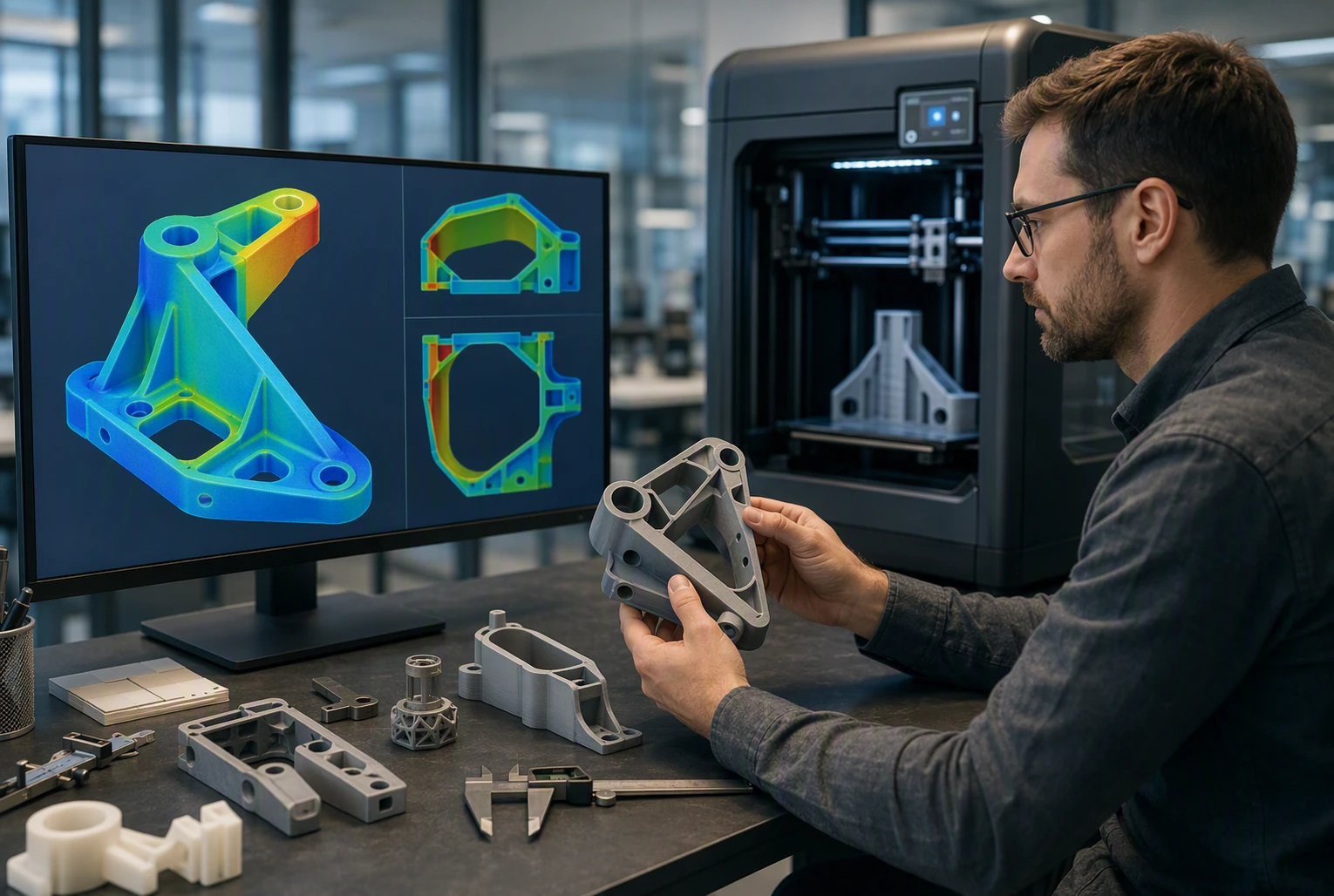
Small CAD errors become expensive once you print ten parts instead of one.
Design for Strength and Fit
Strength is not just about material choice. NIST guidance notes that orientation, tolerances, surface needs, and feature design can all change final part performance. Before approval, verify:
- Load direction
- Assembly fit
- Snap, thread, or press-fit behavior
- Post-processing needs
If the part must be used, tested, or sold, print a pilot batch first.
Also Read: Rapid Prototyping Gains New Momentum in India’s Startups
Where 3D Printing Adds the Most Value in India
Engineering and Product Development
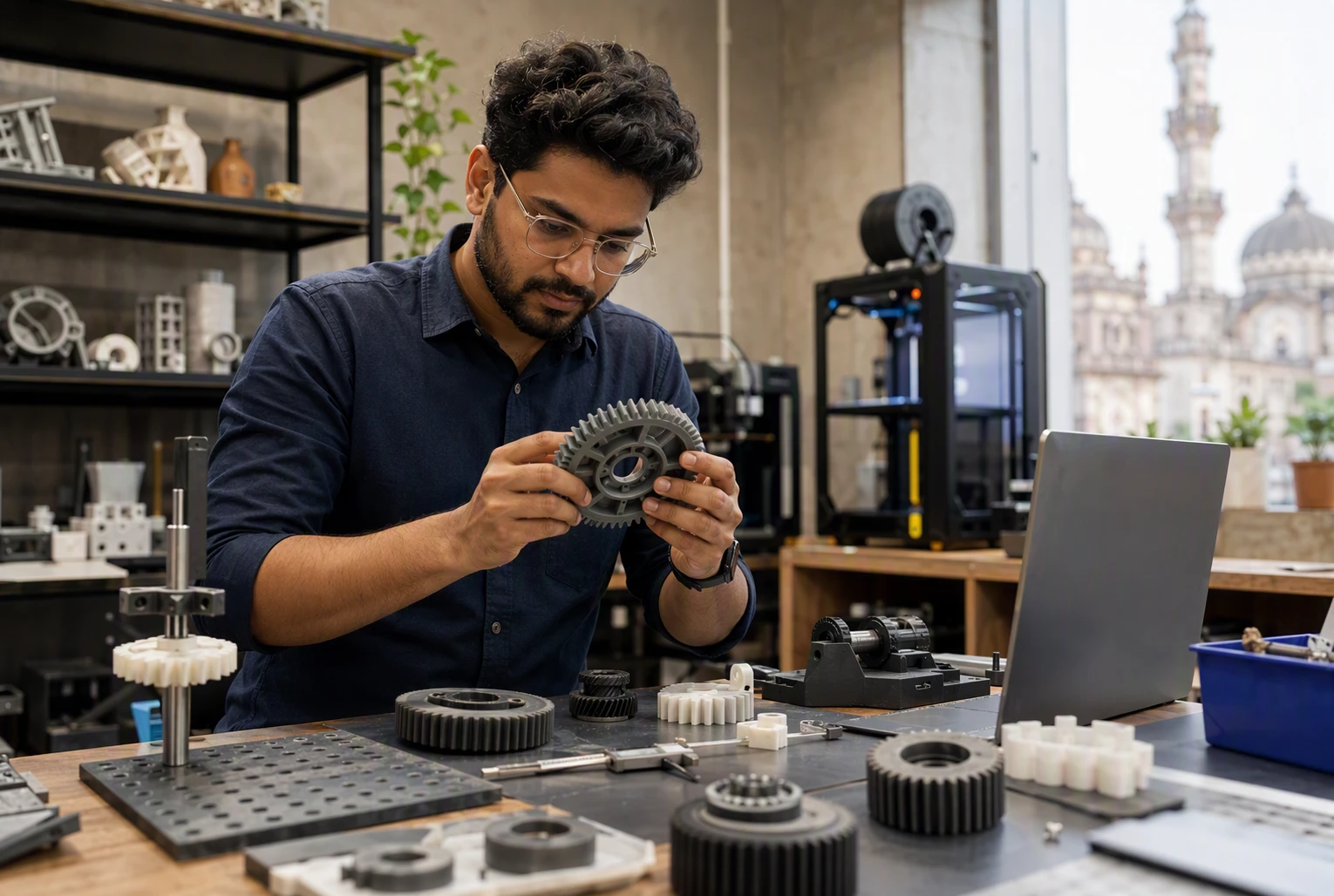
3D printing pays off fastest where teams need parts, test fits, and quick design changes. In India, adoption is rising because it cuts prototype time, lowers tooling risk, and helps MSMEs move faster, according to a 2025 India additive manufacturing case study. For product teams, the sweet spot is:
- concept models
- functional prototypes
- jigs, fixtures, and low-volume parts
Architecture, Models, and Visual Presentation
Architects and real estate teams gain value from clear physical models that clients can review in minutes. Printed scale models help explain layout, massing, façade detail, and site context better than flat drawings. This use is also growing as India tests 3D printing in construction and housing, as reported by Hindustan Times on public housing pilots.
How to Work With a 3D Printing Service in India
Request a Quote the Right Way
Send more than just an STL file. A good quote needs your part use, quantity, size, material, finish, tolerance, and deadline. If fit matters, upload STEP along with STL. Ask the service to flag weak walls, support marks, and changes needed before printing. Platforms in India often support file upload, material choice, and manufacturability review, as shown by iamRapid’s workflow.
Clear specs cut delays, rework, and surprise costs.
- Share target use
- Mention quantity
- State finish needs
Review Lead Times, Quality, and Delivery
Check total time, not just print time. In India, many jobs take days because review, printing, post-processing, and shipping all add up. Typical FDM orders often land in about 3 to 5 business days.
Use this checklist:
- Confirm dispatch date
- Ask for tolerance and QC method
- Check packing and courier coverage
- Approve a sample for repeat orders
For business parts, ask who owns the risk if a print arrives warped or late.
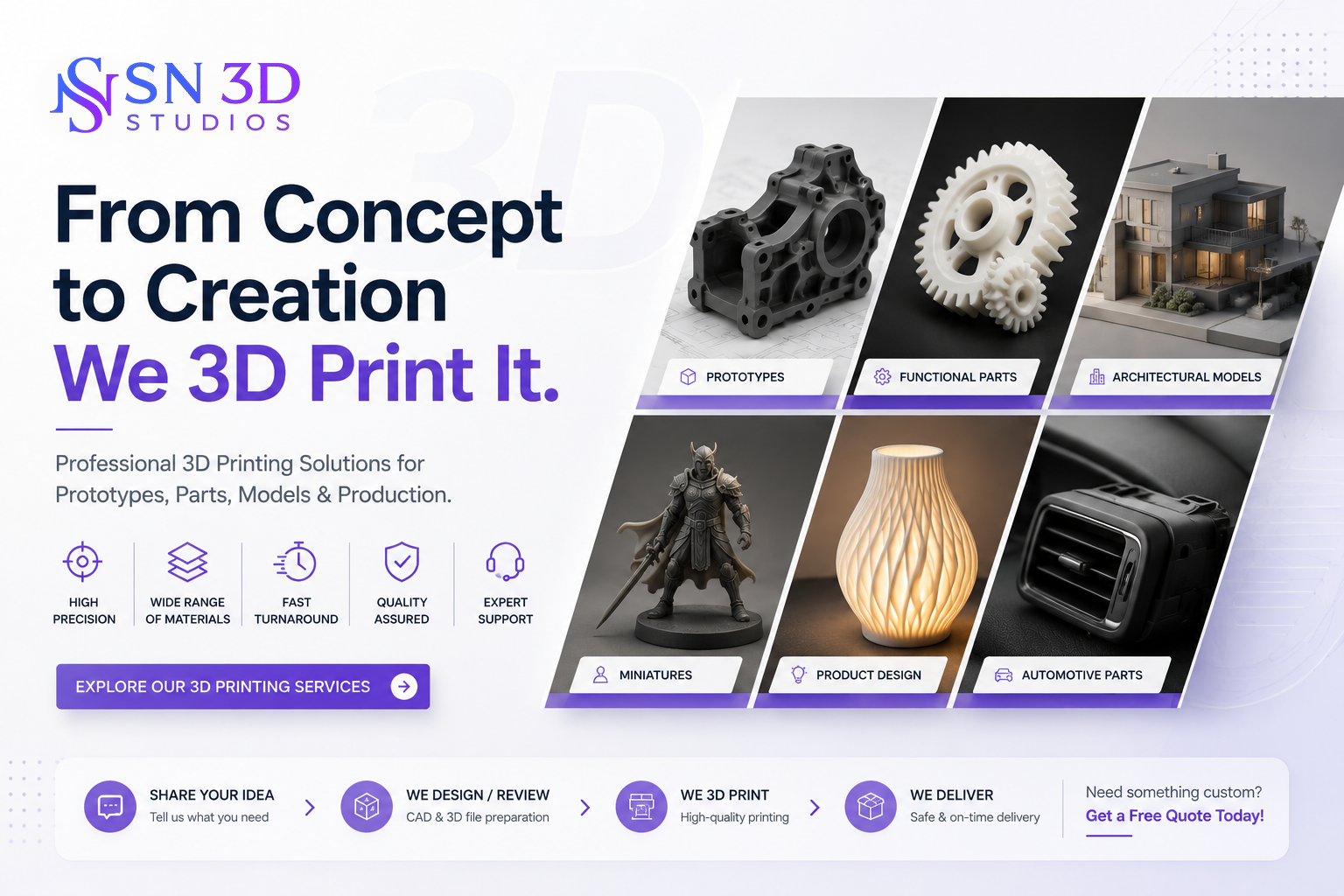
Need a prototype, part, model, or short-run batch fast? Get expert help from SN 3D Studios for precise 3D printing in India.
Frequently Asked Questions
Q1: What are the key advantages of 3D printing solutions for prototypes and production in India?
You get faster samples, lower tooling cost, easy design changes, and local supply support. It works well for custom parts, retail displays, jigs, gifts, and short production runs where speed matters more than mass-scale unit economics.
Q2: How does SN 3D Studios’ technology ensure precision in engineering parts and architectural models?
SN 3D Studios uses the right print process, tuned settings, and material choice for each job. That helps control tolerances, surface finish, wall strength, and fine detail, which matters for fit checks, presentation models, and functional parts.
Q3: What are the best 3D printing methods for low-volume prototypes in Hyderabad and Telangana?
FDM suits low-cost concept models and larger parts. SLA is better for fine detail and smooth surfaces. SLS fits strong functional parts without support marks. Your best choice depends on accuracy, finish, strength, lead time, and budget.
Conclusion
Choose 3D printing by job, not hype. Match process, material, finish, and batch size to your goal. In India, additive manufacturing now supports prototypes, parts, and low-volume production across industries 3D printing in India.