
Guide to Advanced 3D Printing Solutions in 2026
Quick Summary: By 2026, advanced 3D printing in India will focus on full workflows that include design, quality control, and data tracking, not just machines. AI and digital twins will enable faster, more reliable production, especially for prototypes and small batches. Material choices will lean toward sustainable options like recycled plastics, but strength and finish still matter for end-use parts. Picking the right technology depends on your part size, material needs, and production volume.
A Bengaluru design team can now turn a parametric idea into a print-ready prototype, facade model, or decor batch with far fewer platform and vendor changes. This guide cuts through confusing 3D Printing Solutions choices, maps the best Advanced 3D Printing and 3D Printing Technologies for India, and shows how smart 3D Printing Solutions fit real design and production work.
What Advanced 3D Printing Solutions Include in 2026
Advanced 3D printing solutions now mean a full workflow, not just a machine. You need design review, material choice, print planning, post-processing, quality checks, and delivery in one chain. NIST highlights digital twins, AI, and end-to-end data flow as key to faster, more reliable additive manufacturing NIST’s AM informatics project. For Indian teams, this matters when prototypes must move fast into client demos, fit checks, or short production runs.
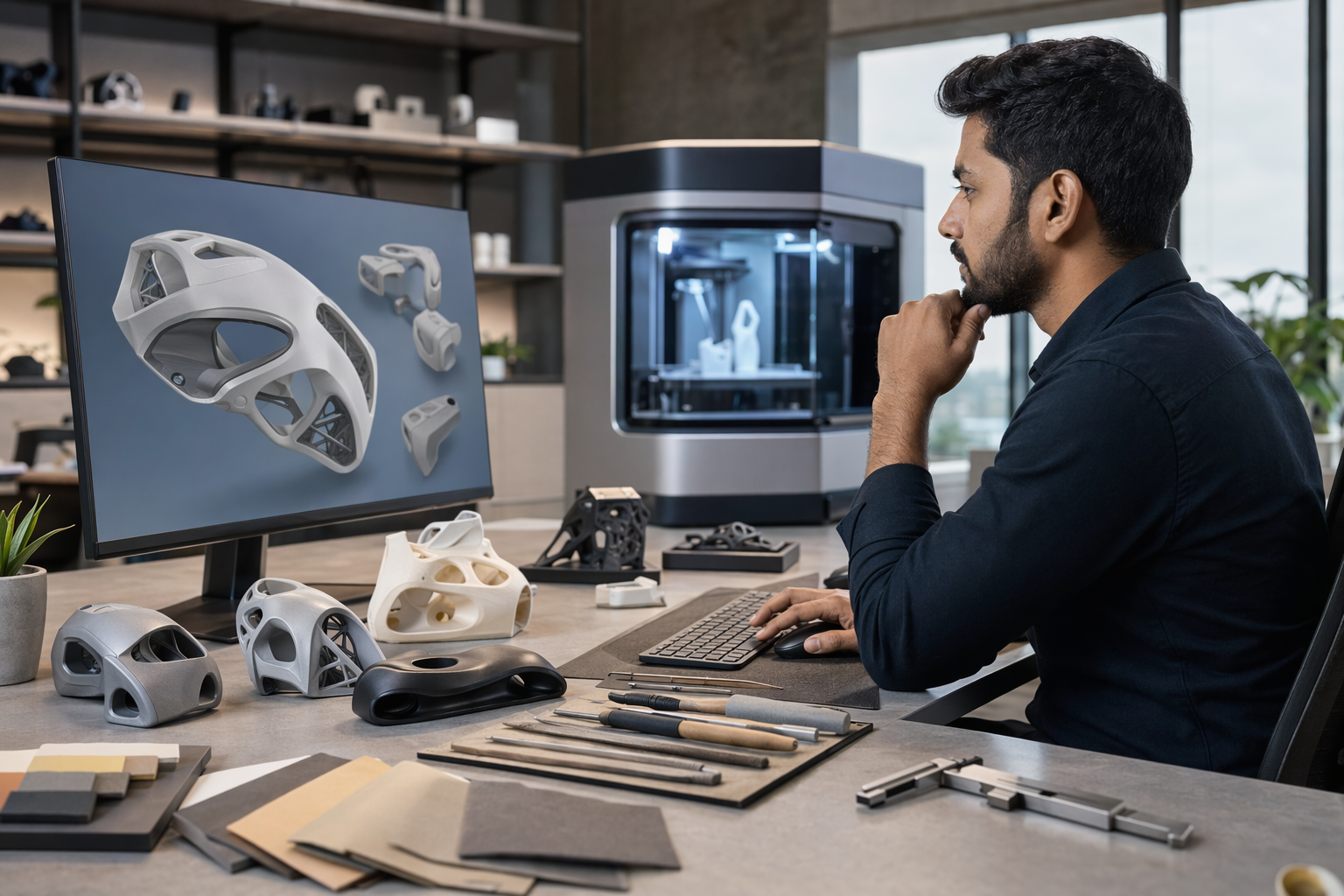
The big 2026 upgrades are:
- AI-assisted design and print setup
- Closed-loop quality checks
- Traceable production data
- Better materials for end-use parts
- Faster post-processing workflows
A 2026 NSF roadmap says AI-augmented additive manufacturing now supports real-time defect detection, digital twin use, and closed-loop control NSF’s AI-augmented AM roadmap.
Also Read: Architectural Models vs 3D Prints: Best for Project Pitches
How to Choose the Right 3D Printing Technology for Your Use Case
Pick the process by part goal, material need, finish, and batch size. 3D printing is a group of different processes, not one tool, as explained in Wikipedia’s 3D printing overview.
- FDM works for low-cost concept models, fit checks, and simple jigs.
- SLS fits durable nylon parts, complex shapes, and short-run production.
- Resin printing suits display models, dental-style detail, and smooth surfaces.
- For India-based teams, this choice often decides cost more than printer brand.
- Metal printing makes sense when heat, wear, or load rules out polymers.
- Hybrid workflows mix printing with CNC finishing for tight tolerances and critical faces.
- Powder-bed metal systems can deliver strong, near-net-shape parts, but post-processing still matters, based on Springer’s 2026 review of metal powder additive manufacturing.
If the part must survive real stress, test one printed sample before you scale.
- Choose print farms when speed matters for many small parts.
- Choose large-format systems for big architectural models.
- Choose decentralized production when shipping time, spares, or local delivery matters. SN 3D Studios can help here with regional support in South India.
Which Materials and Design Strategies Deliver Better Results
Better results come from matching material to use case, then designing for the process. In 2026, the strongest gains come from smarter geometry, cleaner material choices, and fewer print-risk features.
Generative design and AI-assisted optimization AI helps cut weight, spot weak zones, and improve support strategy before printing. Recent research shows AI improves design precision, efficiency, material selection, and defect prediction in 3D printing ScienceDirect review.
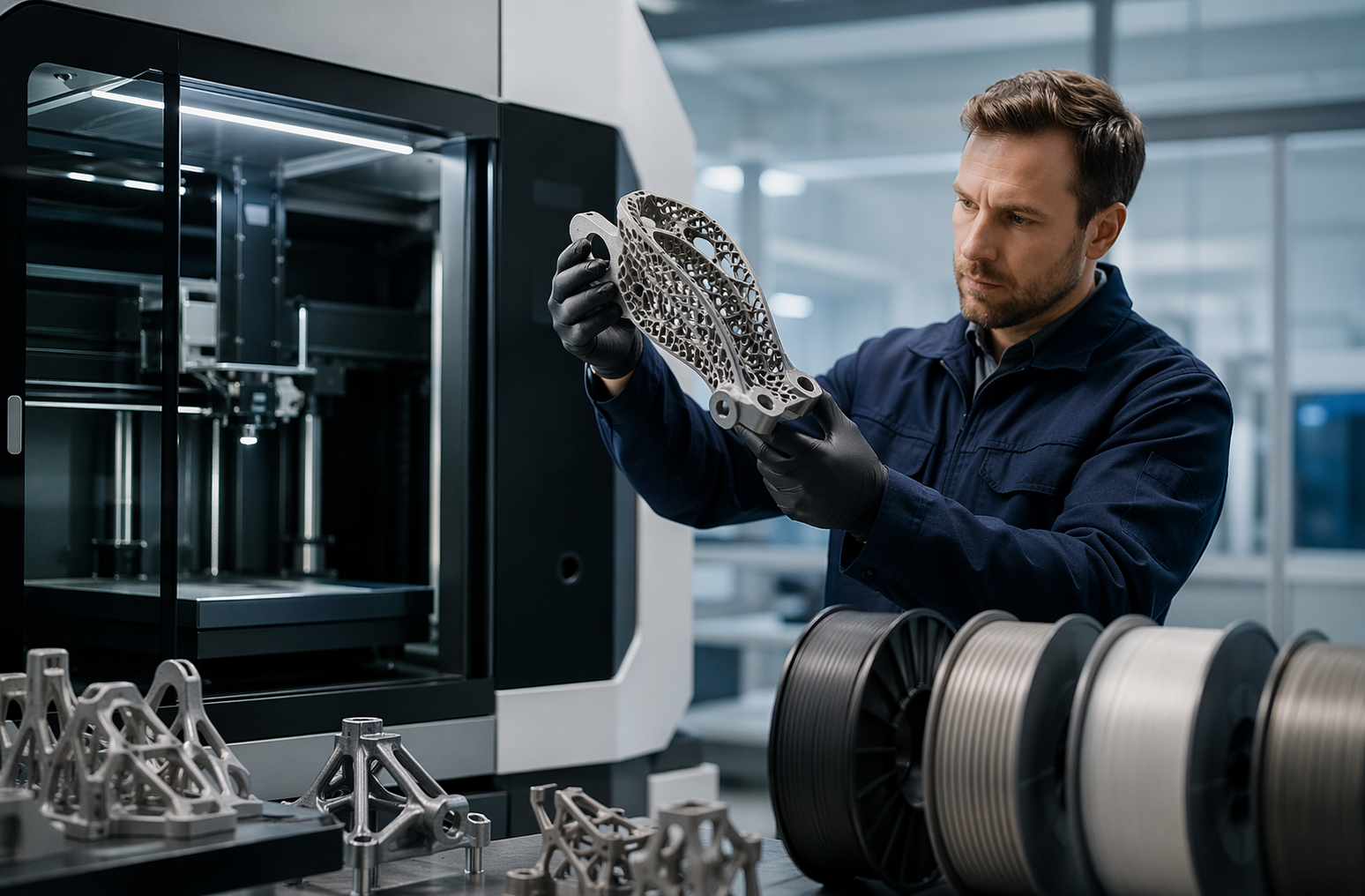
Recycled, bio-based, and high-performance materials Recycled PLA, rPET blends, bio-fillers, and bio-based resins are getting more useful, not just greener. A 2026 study on recycled PLA composites reported tensile strength up to 119 MPa in a reinforced formulation Springer study. For end-use parts, nylon, carbon-filled polymers, and tough resins still lead.
Pick materials by heat, load, finish, and outdoor exposure – not just price.
Design rules that improve printability
- Keep wall thickness consistent
- Add fillets to sharp corners
- Reduce steep overhangs
- Split large parts for better yield
- Design for orientation first.
- Minimize supports.
- Leave tolerance for fit and post-processing.
Common Applications and What to Ask a 3D Printing Provider
Best-fit applications by audience
NIST says 3D printing works well for rapid prototyping, low-volume production, custom products, jigs, fixtures, and spare parts according to NIST. For this audience, that means:
- Product designers – concept models, fit checks, functional prototypes
- Architects and firms – scale models, façade studies, site massing
- Prototyping companies – short-run parts, tooling aids
- Gift and decor sellers – custom pieces, name items, seasonal runs
- Custom buyers – one-off gifts, miniatures, display pieces
Questions to ask before you place an order
Ask these before you commit:
- Which process and material fit my use case?
- What tolerance, finish, and strength can you guarantee?
- Will the part need support removal or post-processing?
- What file format and wall thickness do you need?
- What is the lead time for one sample and for repeat orders?
For architectural work, standards still lag in additive construction, so ask extra questions on testing and performance as NIST notes.
Need the right 3D printing partner in India? SN 3D Studios helps you turn designs into accurate prototypes, parts, gifts, and architectural models fast. Request a quote and discuss your use case today.
Frequently Asked Questions
Q1: What are the key advancements in 3D printing technology expected in 2026?
Faster multi-material printing, better surface finish, stronger engineering polymers, metal part access, and smarter quality checks lead 2026. Indian buyers will also see shorter prototype cycles, more accurate architectural models, and easier small-batch custom production.
Q2: How will AI-powered generative design transform 3D printing in India by 2026?
AI will help teams create lighter, stronger, and cheaper parts faster. For Indian product firms and architects, this means fewer design rounds, less material waste, and quicker movement from concept to print-ready files.
Q3: What role do sustainable and recycled materials play in India’s 3D printing industry in 2026?
Sustainable materials help cut waste and improve brand value. In India, recycled filaments and bio-based options will matter more for prototypes, decor, and retail products, especially where clients want lower cost and greener sourcing.
Conclusion
Choose 3D printing by use case, not hype. For India in 2026, faster prototyping, custom production, and construction demand keep growing, while additive manufacturing and public housing pilots show real scale.