
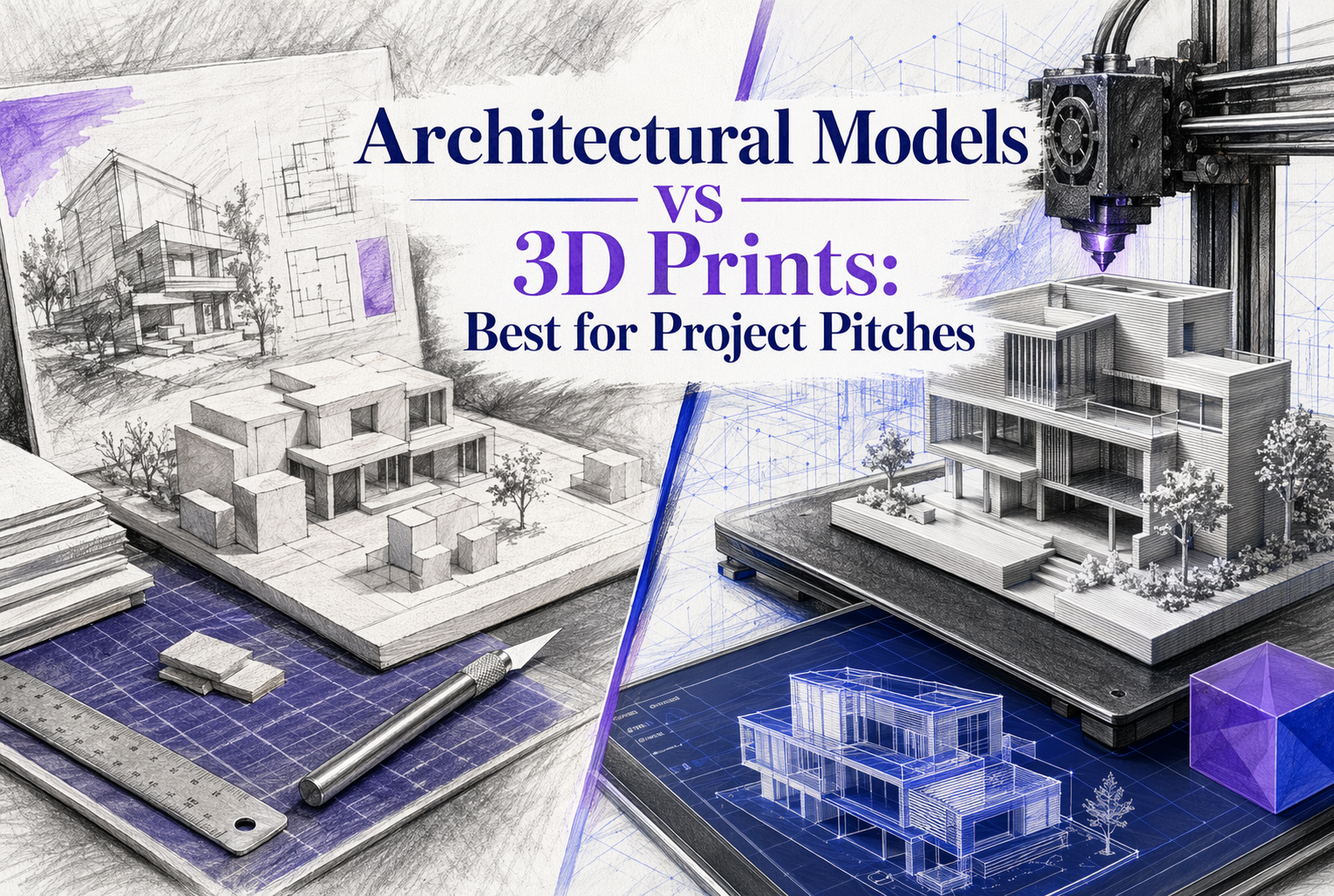
Architectural Models vs 3D Prints: Best for Project Pitches
Quick Summary: Architectural models are better for creating a premium, emotional impression during pitches, especially for investors or luxury clients. 3D printed models excel in speed, accuracy, and flexibility, making them ideal for quick revisions and complex designs. For the best results, many teams combine both: print the structure fast and hand-finish key details for impact. The choice depends on whether the focus is on visual polish or rapid iteration.
For pitches, Architectural Models usually win on emotion and finish, while 3D Printing Models win on speed, edits, and complex forms. Teams often must choose fast for client reviews or launches, and the wrong call can hurt the pitch. This guide compares Architectural Models and Project Pitch Models by impact, detail, flexibility, and turnaround, based on real pitch needs in India.
Architectural Models vs 3D Printing Models: At a Glance
| Architectural Models | 3D Printing Models | |
|---|---|---|
| Presentation impact | Premium, tactile, highly persuasive | Clean, precise, tech-forward |
| Turnaround speed | Slower, depends on manual finishing | Fast, especially for revisions |
| Detail and accuracy | Strong in curated finish and composition | Very high from CAD data |
| Revision flexibility | Moderate; changes take more manual rework | Excellent; files can be updated quickly |
| Best for | Investor pitches, premium client presentations | Tight deadlines, complex geometry, iteration |
| Cost efficiency | Better for polished one-off showcase models | Efficient for rapid changes and multiple copies |
How Architectural Models and 3D Printing Models Compare
Architectural Models
Architectural models are physical display pieces made to sell a design clearly in the room. They suit investor meetings and high-stakes client pitches where finish, mood, and tactile impact matter most.
Key strengths
- Premium look
- Strong presentation value
- Best for polished one-off showcases
3D Printing Models
3D printing models are CAD-led scale models built for speed, precision, and repeat output. They fit teams that need quick updates, complex forms, or multiple copies for reviews and pitch rounds.
Key strengths
- Fast revisions
- High accuracy
- Efficient for iterations
When a premium finish matters most
Use a hand-finished architectural model when the room is full of investors, luxury buyers, or senior decision-makers. The visual polish signals care, brand value, and confidence.
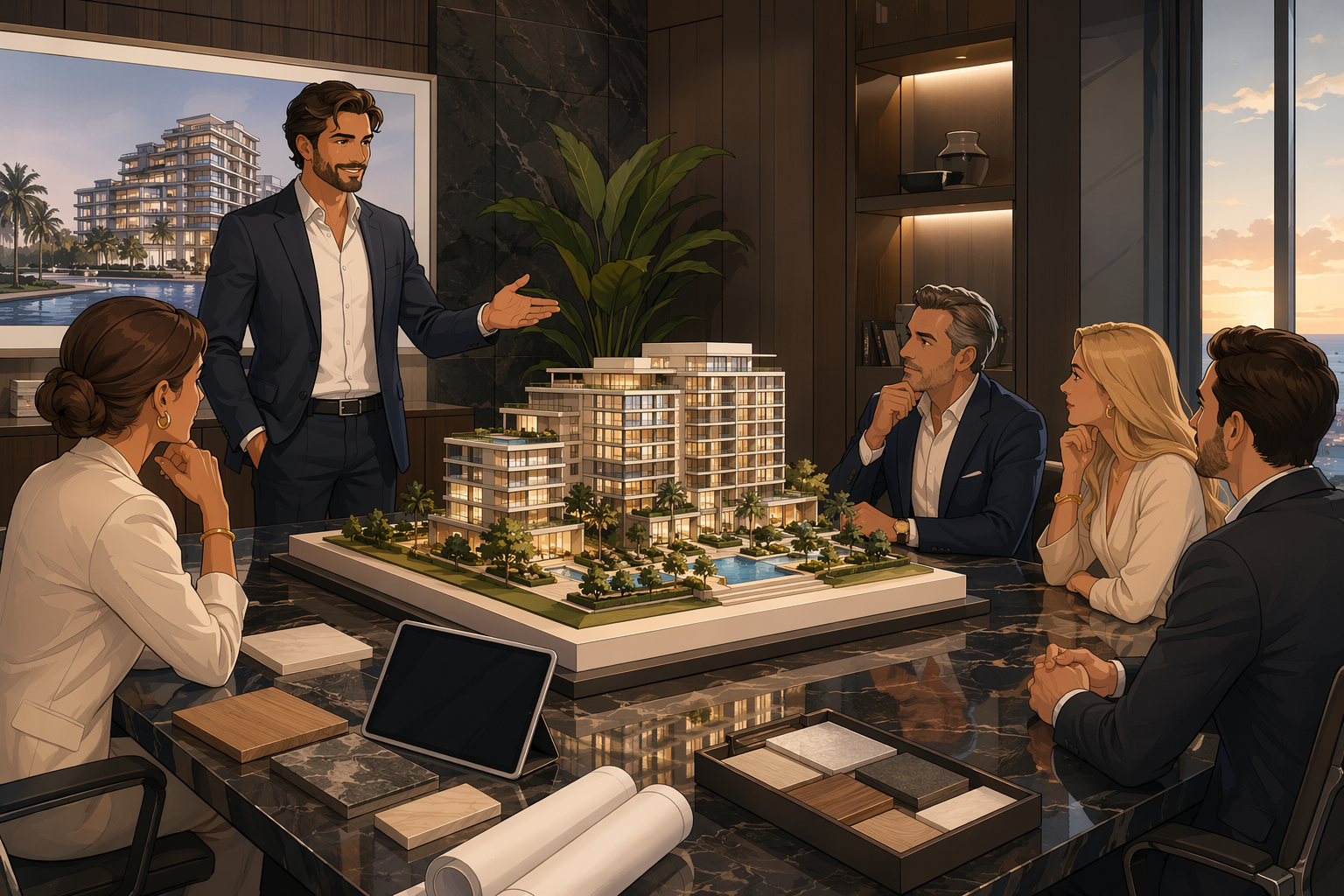
If people will judge the project by first impression, finish quality can matter more than technical detail.
Speed, Revisions, and Delivery Risk
Under pitch pressure, 3D prints usually win on speed. If your client changes façade lines, massing, or road layout one day before review, you can often edit the file and reprint only the affected part. A 2026 architecture study found 76% of respondents saw 3D printing as enabling faster iteration in design work.
Handcrafted models still have an edge in finish. Skilled painting, texture work, trees, lighting, and material blending can feel more premium in a boardroom. But that polish takes more bench time and adds delivery risk if changes come late.
- Choose 3D print for fast revisions and tight deadlines
- Choose handcrafted for final-stage presentation impact
- Ask SN 3D Studios for modular parts if you expect client edits
Which Should You Choose for Your Pitch?
Pick based on what the meeting needs. Architectural models are often used to communicate design intent and sell a final design, while 3D printing is valued for speed and direct CAD-to-model output.
- Choose architectural models when the room is selling trust
Use them for investors, premium homes, public displays, and client boards. A crafted model feels finished, easier to gather around, and better for emotional buy-in. - Choose 3D printing models when the schedule is the priority
Use them for fast design reviews, tender updates, concept changes, and repeat iterations. 3D printing methods are used to build models directly from CAD plans, so changes move faster. - The hybrid option that often works best
Print the massing and structure, then hand-finish key surfaces, landscape, and lighting. This gives you speed plus polish. For many India pitches, that balance wins approvals faster than choosing only one format.
Need a pitch model fast? Get custom architectural models and 3D prints from SN 3D Studios and move approvals quicker.
Frequently Asked Questions
Q1: How do architectural models benefit project pitches compared to 3D printed models?
Traditional models feel premium and work well for luxury presentations. 3D prints win on speed, repeatability, and detail changes. For most India pitch deadlines, 3D prints help teams show updates faster and get approvals with less rework.
Q2: What are the main advantages of using 3D printing for architectural models in India?
It cuts lead time, supports quick design edits, and keeps small-batch costs practical. It also helps firms ship models between cities more easily. This matters when client meetings move fast and pitch versions change late.
Q3: Which materials are best for high-quality architectural 3D prints in India?
PLA suits concept models, resin suits fine facade detail, and ABS or PETG suits tougher handling. The best pick depends on finish, fragility, transport, and budget, not just print quality.
Conclusion
Choose architectural models for tactile impact and room-scale context. Pick 3D prints for speed, edits, and fine detail. India’s wider 3D construction push shows fast visual approval tools now matter even more